Solar Panel Installation on Long Island: My Summer 2024 Experience
Intro
This is a writeup of my adventure in getting solar panels installed at my house. I’m writing it in case it’s helpful to other people considering solar.
My story has a (maybe) strange beginning. In April 2024 I was in my yard playing with my dogs when a door-to-door solar salesman saw me and in a moment of weakness I gave him my contact information. He was from a company called NYS Solar and he scheduled a consultation for me with a sales rep. A couple weeks later I met with the sales representative and I wasn’t really sold on it - the costs he quoted didn’t seem to make any sense, and he didn’t provide me anything in writing either, he just showed me some stuff on his ipad. I didn’t get a great feeling from him, but it did make me start considering solar for my home.
It’s worth noting that in February 2024 I got a Tesla Model Y, and my electricity usage had gone up significantly since then due to charging the car at home nightly. Living on Long Island (New York), we already have some of the highest electricity costs in the country, and with the growth of AI in the coming years I expect the demand and cost of power will only increase, so I viewed solar panels as a way to mitigate this and essentially lock in costs for the foreseeable future, and maybe even provide a way to be self-sustaining if we lose power due to a hurricane (as we did back in 2012 during Hurricane Sandy).
All that said, since I was considering such a huge purchase I figured I should look around at other options rather than just deal with the random salesman who encountered me in my yard. I did some research to determine the most popular providers around and three companies came up a lot: Sunation, LI Power Solutions, and Empower. I scheduled calls with all three.
While all of them gave decent presentations, the sales rep from Empower, Jeff Cohen, really went deep and seemed to have a real mastery of the product and the options. He and I had several Zoom calls throughout May and June where he explained all the options, and we discussed how big of a system I’d need based on my historical usage and with other variables including my son moving out soon for college, and how the EV would impact future usage. He showed me the tool they used to model my house’s potential solar generation over an entire year, which was really cool, and was even able to show me expected usage on a random date/time in the future factoring in position of the sun, shade from trees around my house, etc.
Initial System Proposal
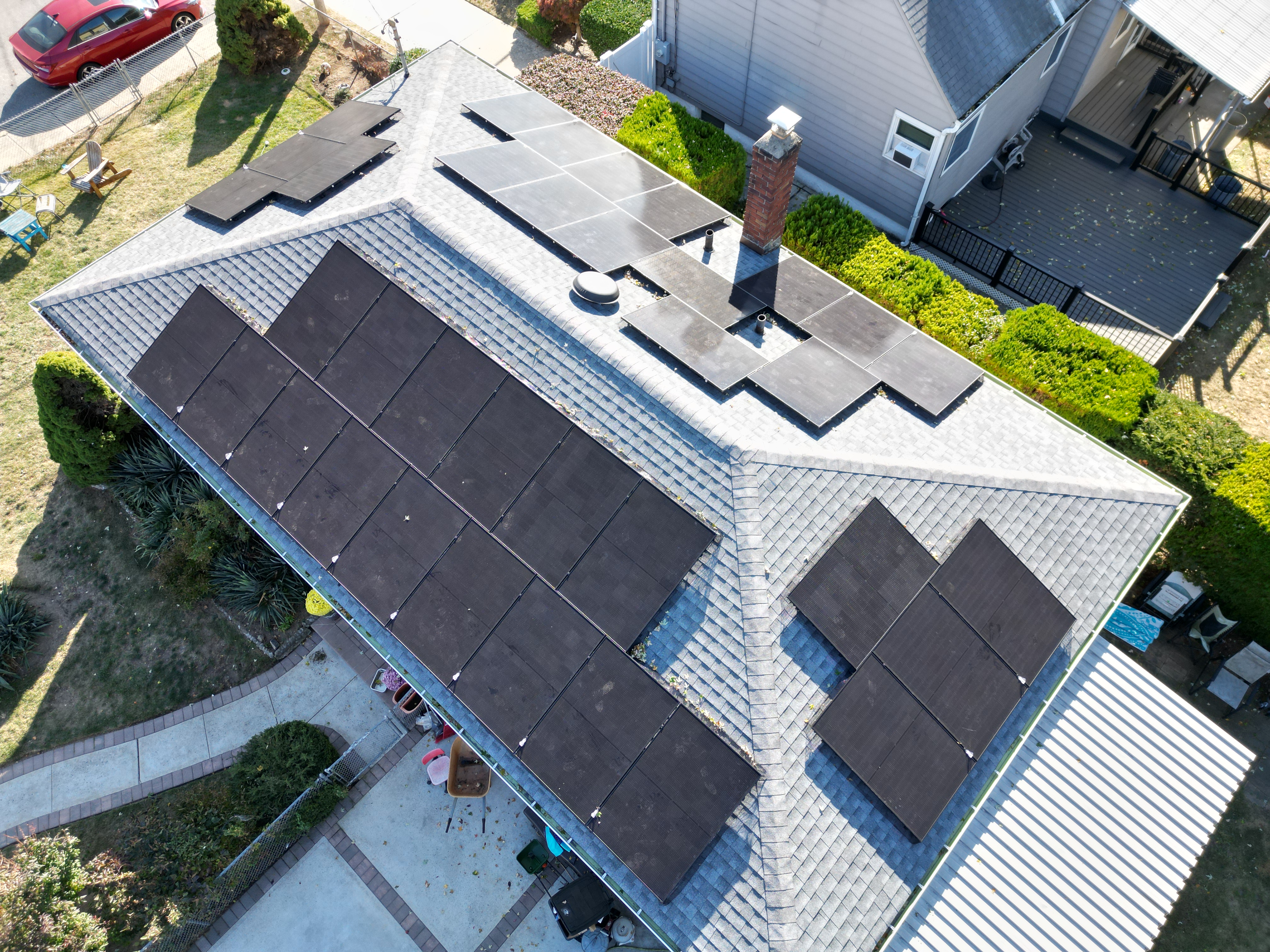
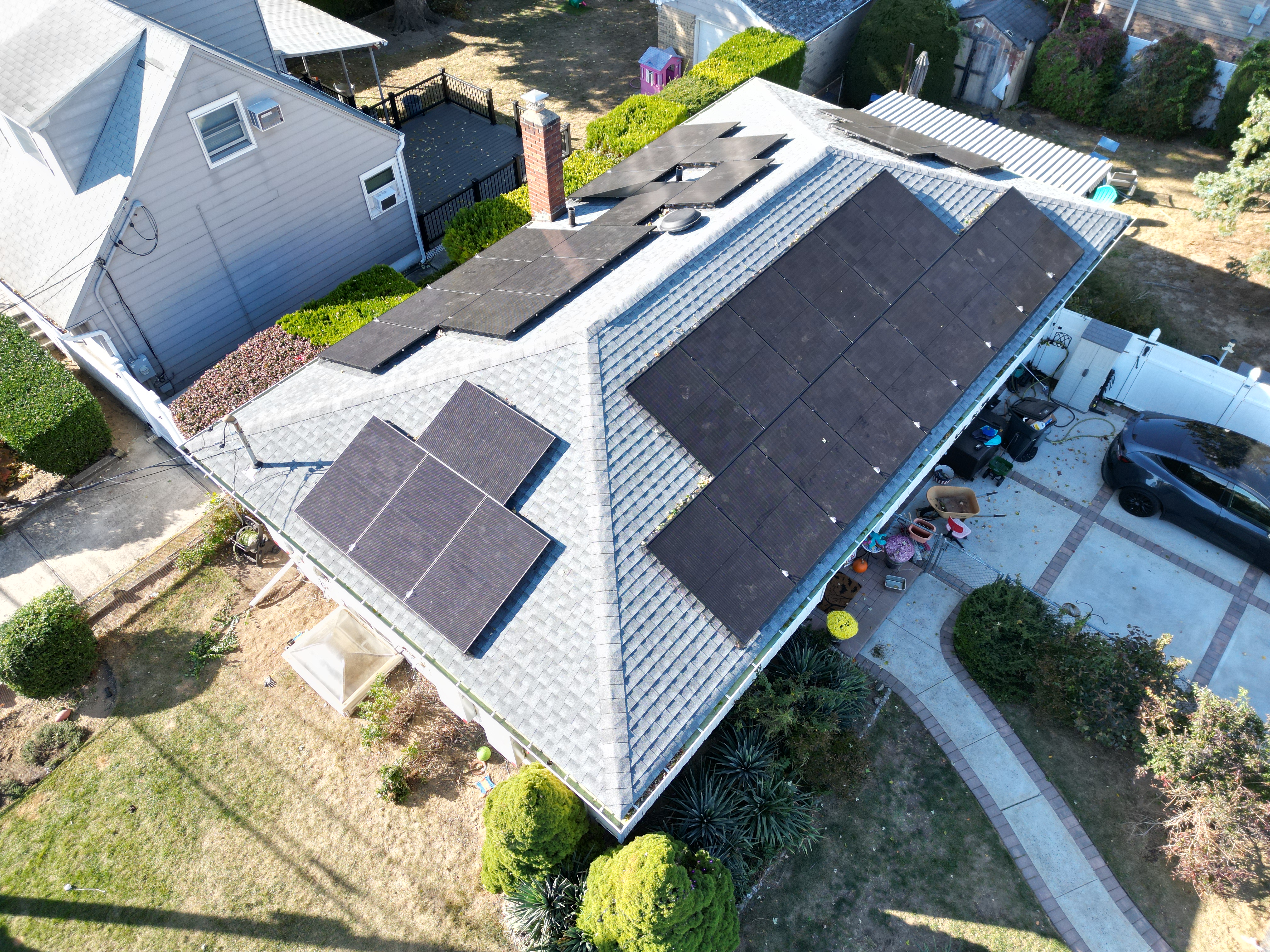
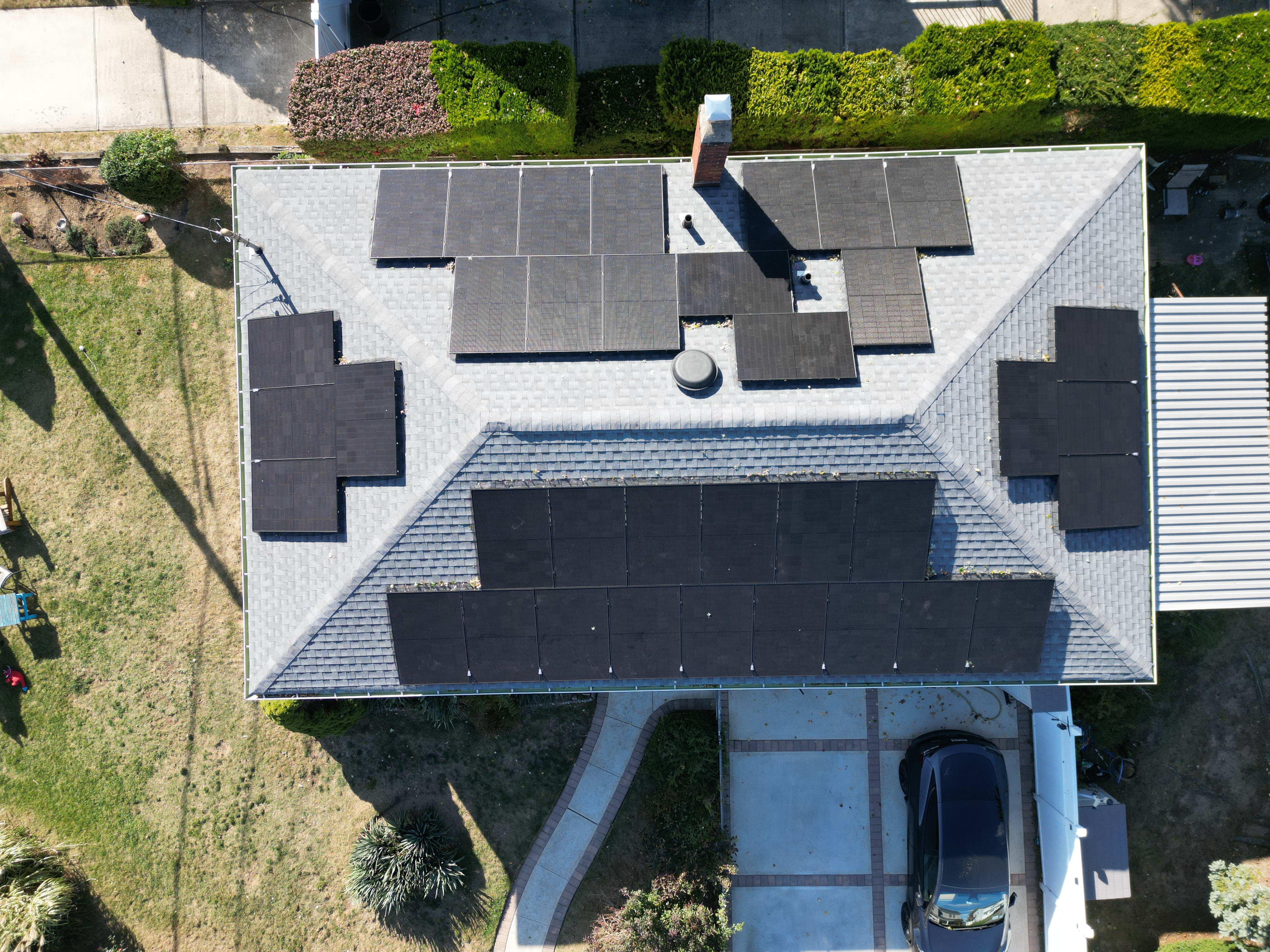
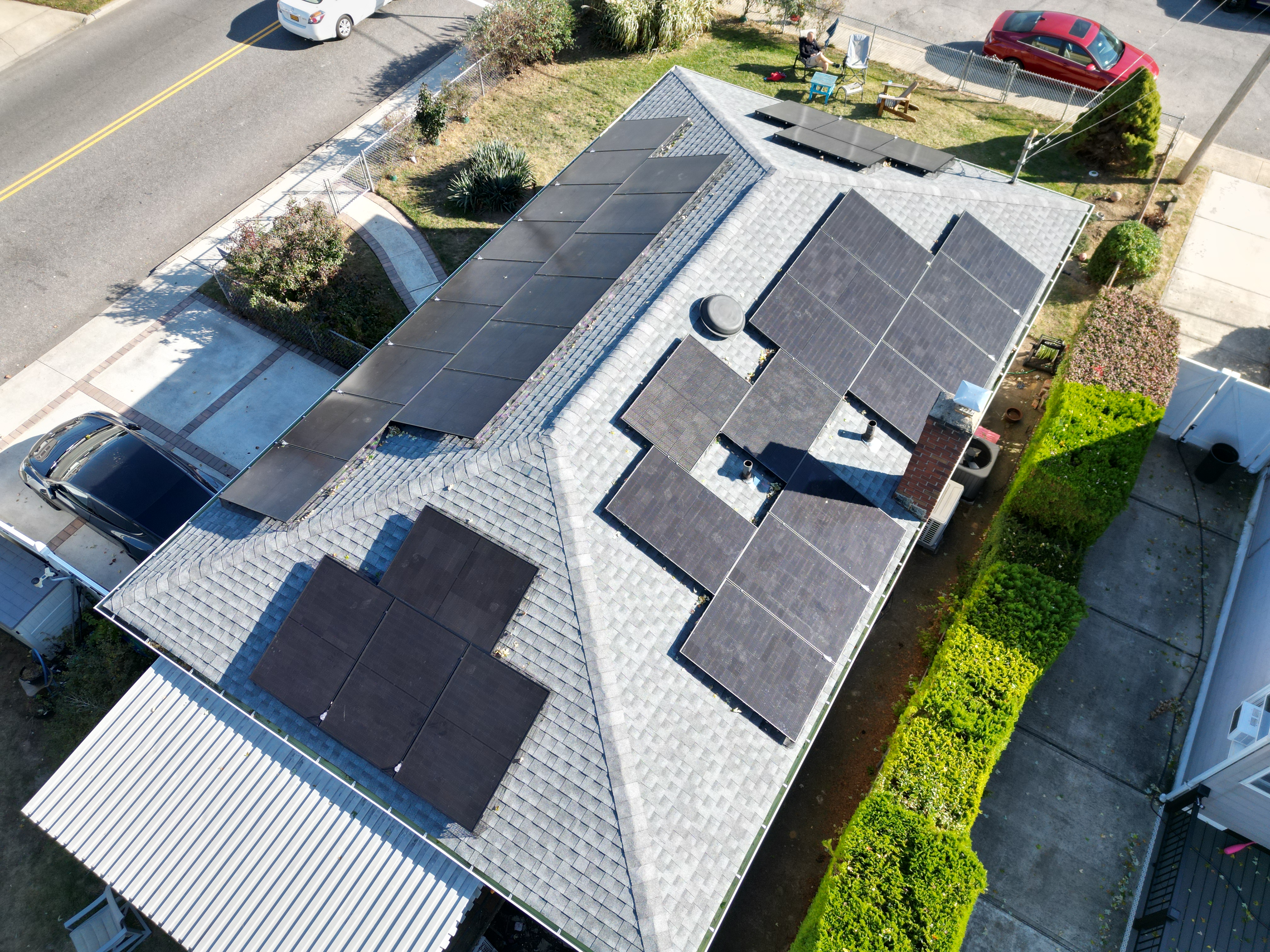
Ultimately we determined that the sweet spot for price/performance for my house was a system with 36x 425 watt QTRON BLK MG2+ with Enphase IQ8 microinverters. The total production estimate was 15.3 kW. The total cost for the system was about $46,000. New York State offers financing up to $25,000 for solar installation through NYSERDA with a rate of 6.99%. There’s also a 30% federal tax credit, and a $5000 NYS tax credit. Empower arranged a zero interest bridge loan through Mosaic for the amount of those tax credits - $18,786. So my only out-of-pocket up front cost was $2,318. I signed that contract (via DocuSign) on July 8th. As part of the contract, Empower handled all of the permitting and dealing with both the town and PSEG. I did have to dig up a survey of my property but I emailed the town clerk and they provided that to me right away. Empower also sent someone to my house to do a site survey with a drone, and eventually someone came to check out the attic as well.
Since I had started researching solar, I noticed many houses in my neighborhood that already had solar installed, but when I asked the homeowners for details they didn’t seem to remember who installed their systems, how much they cost, or any other information. I did notice however that many of the houses had a lot of exposed conduit running on the exterior of the roof, which I found really unattractive. I discussed this with Jeff and provided him with some photos of what I did not want. Fortunately since my house has a usable attic, most of the wiring would be able to be run through the attic using SolaDeck.
Powerwalls
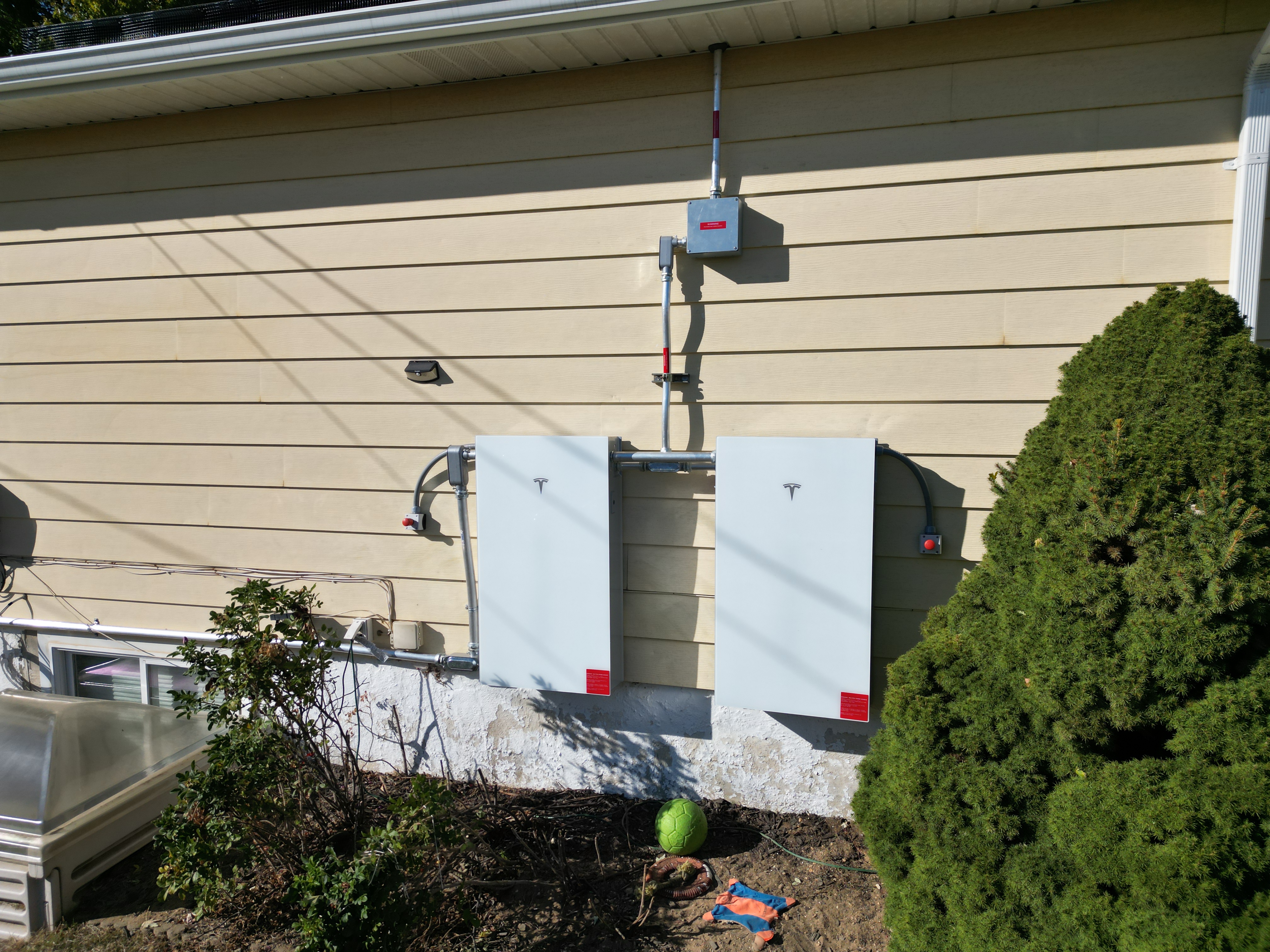
After signing the contract with Empower, I spent some time thinking about the system and decided I wanted to add the Powerwall battery backup to the project as well. When Hurricane Sandy hit, we were without power for 9 days and it began to seem silly to undertake a project like this and skip over the ability to remain up during a grid outage. I spoke to Jeff at Empower about adding Powerwall to the project and we decided to go with 2x Powerwall 3 batteries.
I signed the modified contract with the Powerwall on August 18th. This required a modification to the permit and a visit from an Empower inspector to determine where the powerwalls could be placed. It turned out the only place it could go on my house was on the south wall, which wasn’t really ideal but due to the constraints of the Powerwall itself (can’t be within 3 feet of a window or door) this was the only option. I’ll probably end up planting some arborvitae around it to hide it from the street in the spring, but this wasn’t a huge problem for me (though my wife definitely doesn’t love it).
Installation
Once all the permits were approved by the town it was time to schedule the installation. The first available installation window was in September but unfortunately I was out of town that week. The next available date was October 8th. The installers showed up just before 8 AM and started work at 8 and worked all day. They came back the next day to finish the panel installation. A different team arrived on October 10th to do the Powerwall installation. They got it all done and demonstrated it working before they left. Unfortunately they had to disconnect it before leaving as we had not yet received permission to operate (PTO) from PSEG.
I finally got PTO from PSEG on November 7th, and on November 8th I talked to Empower and got the system up and running, and was able to see power flowing from the panels into the Powerwalls and to the house and back into the grid. It was awesome to see the thing finally producing after months of discussion and waiting! The Tesla app has a great UI showing how much is flowing in and out of the system in realtime. I also found out there’s a Tesla HomeAssistant integration, and since I already had HomeAssistant setup I was able to add this pretty quickly and soon got some awesome data and charts setup. If you’re a chart nerd like me, the data provided by the Tesla API is pretty sweet. Check out this chart:

The orange line is the power generated by the solar panels, the yellow line is power grid utilization, and the green line is charge level of the Powerwall. You can see that it was drawing power from the grid before 6AM (when the Powerwall was at 30% - the level I set it for reserve), but as soon as the sun came up, power started getting pushed to the grid, and then once the Powerwall was fully charged, all the excess power was pushed to the grid, generating credits with the utility. Like I said, as a graph nerd, this stuff is amazing.
Cost / ROI
Obviously the Powerwalls increased the cost of the project and I ended up paying another $10,712 out of pocket. With the Powerwalls added in, the payment breakdown came to $13,030 up front (out of pocket), $24,850 NYSERDA loan, $23,377 bridge loan (to be paid via the tax credits), and a $6,250 rebate for the Powerwalls, meaning that the total project cost was $67,508. Of that, I paid the $13,030 up front and will pay off the bridge loan via the tax credits, and the NYSERDA loan will be repaid at $225/month for 15 years, though I’ll probably pay that off earlier.
Was it worth it? Well, in terms of ROI, my PSEG bills for 2021 averaged $282; for 2022 $332, for 2023 $282, and for 2024 $330. So assuming everything stays the same, it will eventually pay for itself. However, I don’t think everything will stay the same. Increased usage from datacenters for AI and increased interest in EVs will increase demand faster than we will generate supply and I believe the cost per kWhis only going to increase for the foreseeable future. Also the cost number doesn’t factor in the added functionality of a battery backup for the entire house, which is something I’d been wanting for a long time.
Ultimately the ROI question is going to vary for everyone. A big factor to consider is how long you plan to stay in your house. If you think you’ll sell in the next 5 years, solar might not make as much sense. I don’t have plans to sell anytime soon, and frankly I thought it was cool, and the ability to operate off-grid is a huge bonus.
Final thoughts
Overall I’m really pleased so far with the decision to get solar, and found working with Empower really easy. The whole team was very professional, from the sales team to the install crews, and I can’t stress enough how great it was working with Jeff and Nancy Cohen throughout the sales process. Once I had signed the contract, Jeff maintained communication throughout the entire process. There’s a cliche about sales guys ghosting you once they’ve made the sale - this was the complete opposite of that experience. Great guidance throughout the process - not just from Jeff but from the project manager and even senior leadership a few times.
The system has only been active for a few days at this point but so far I’ve been really happy with it and totally recommend Empower to anyone looking for home solar.
Empower info
- Empower (referral link) - https://members.empower-solar.com/l/EVANHOFFMA52/
- Jeff Cohen - [email protected]
Solar Installation timeline
- May 13 - Initial call with Jeff Cohen
- July 8 - Docusigned initial contract
- July 11 - paid $2,318
- August 18 - Docusigned revised contract with PowerWalls
- August 19 - Building permit issued
- September 24 - Paid $10,712
- October 7th - Panel installation begins
- October 8 - Panel install completes
- October 10 - Powerwalls installed
- November 7 - Received PTO from PSEG
- November 8 - System online and generating power.
Drone flyover of the completed installation
https://www.youtube.com/watch?v=4jhAzhvCeDo
default
default
default
default
default